Technology guide

Understand your storage.

The factors that determine how a storage product behaves — explained without marketing numbers.

01

Performance

Read and write

Read speed governs how quickly a device retrieves stored data — transfers, playback, loading. Write speed governs how quickly data is recorded, and it is the limit that matters for burst photography and continuous video. A product is only as fast as its slowest sustained operation.

02 — Standards

Speed classes

Class markings communicate a guaranteed minimum sustained write speed. They exist so a device can be matched to a recording requirement with confidence.

  • C

    Speed Class

    Minimum sustained write speed, the original SD classification.

  • U

    UHS Speed Class

    Minimum sustained write speed for UHS bus devices.

  • V

    Video Speed Class

    Minimum sustained write speed defined for video recording.

  • A

    App Performance Class

    Random read/write performance for running applications from the card.

  • UHS

    Bus Interface

    The bus mode that determines maximum theoretical transfer rate.

The markings for each STINGRAY model are listed on its product page.

03

Capacity

Choosing capacity

Capacity should be matched to file size and session length, not chosen by the largest number available. Higher-resolution capture, longer recording and denser logging all consume space faster; the right capacity keeps a workflow running without unnecessary card swaps.

04

Compatibility

Format and interface

Compatibility depends on the host device: the card format it accepts, the bus interface it supports, the maximum capacity it addresses and the file system it expects. A faster card in a slower host runs at the host's limit. Always verify the device specification first.

Read your card

Everything printed on the card, decoded.

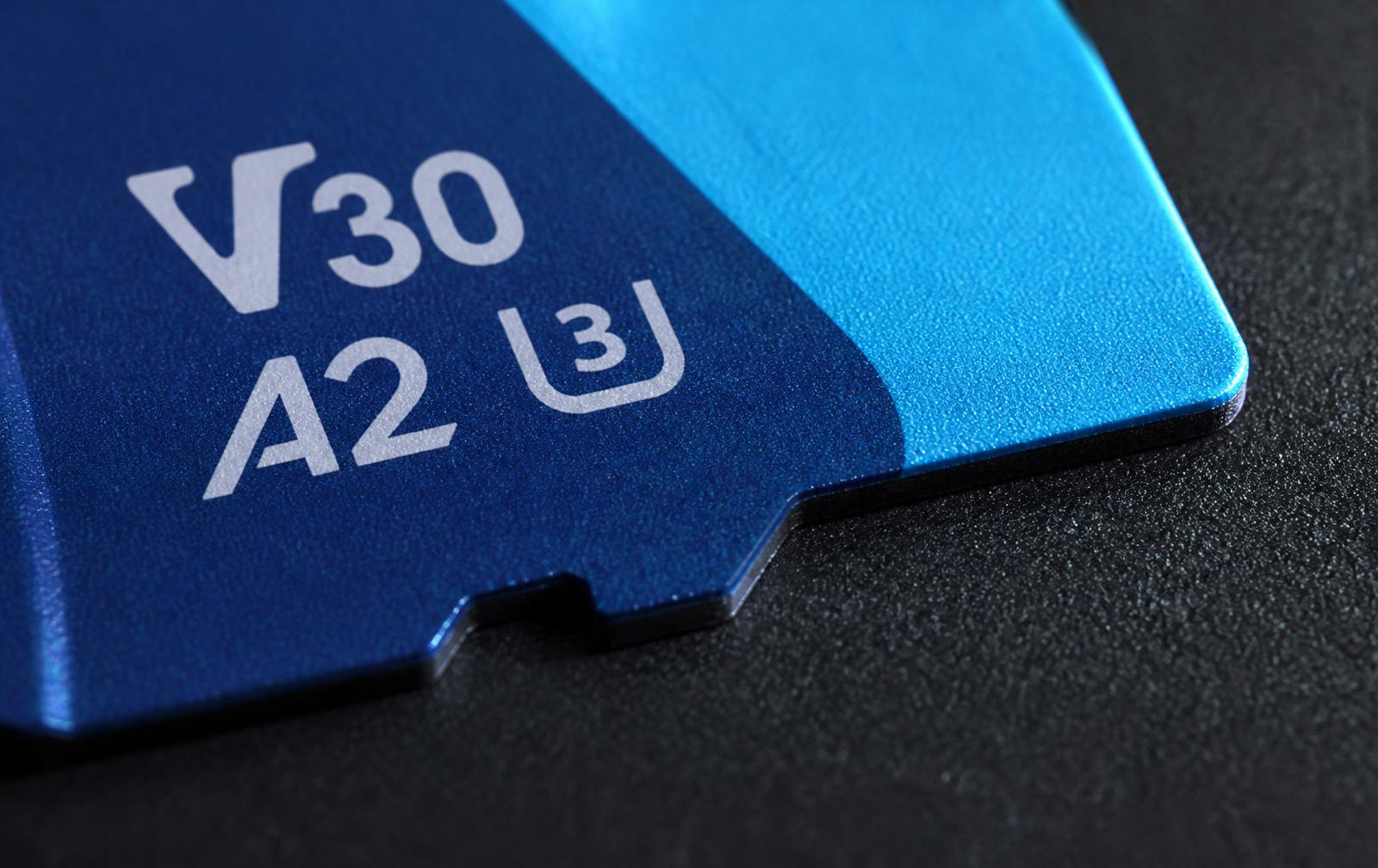
A memory card states its own specification on its face. Once you can read the markings, you can judge any card in seconds.

Macro detail of the printed markings on a STINGRAY memory card
  • 256 GB

    Capacity

    Total addressable storage on the card.

    Hours of 4K footage or tens of thousands of stills before a swap.

  • UHS-I

    Bus interface

    The Ultra High Speed bus the card runs on.

    Determines the ceiling for transfer rates on a compatible host.

  • C10

    Speed Class

    Minimum sustained write of 10 MB/s.

    The baseline for Full HD recording without dropped frames.

  • U3

    UHS Speed Class

    Minimum sustained write of 30 MB/s on a UHS bus.

    Headroom for 4K capture and high-bitrate photography bursts.

  • V30

    Video Speed Class

    Minimum sustained write of 30 MB/s, defined for video.

    A recording guarantee, not a peak figure — takes survive.

  • A2

    App Performance Class

    Random read and write performance for running applications.

    Apps and systems installed on the card stay responsive.

05 — Selection guide

How to choose.

A short decision framework rather than a recommendation engine.

  1. 01

    Start with the device

    Camera, drone, smartphone, computer or embedded system. Confirm the accepted format and interface.

  2. 02

    Decide what matters most

    Capacity, sustained write speed, read speed or durability — workflows rarely need all four equally.

  3. 03

    Match the class

    Select a product whose class guarantees meet the recording or application requirement.